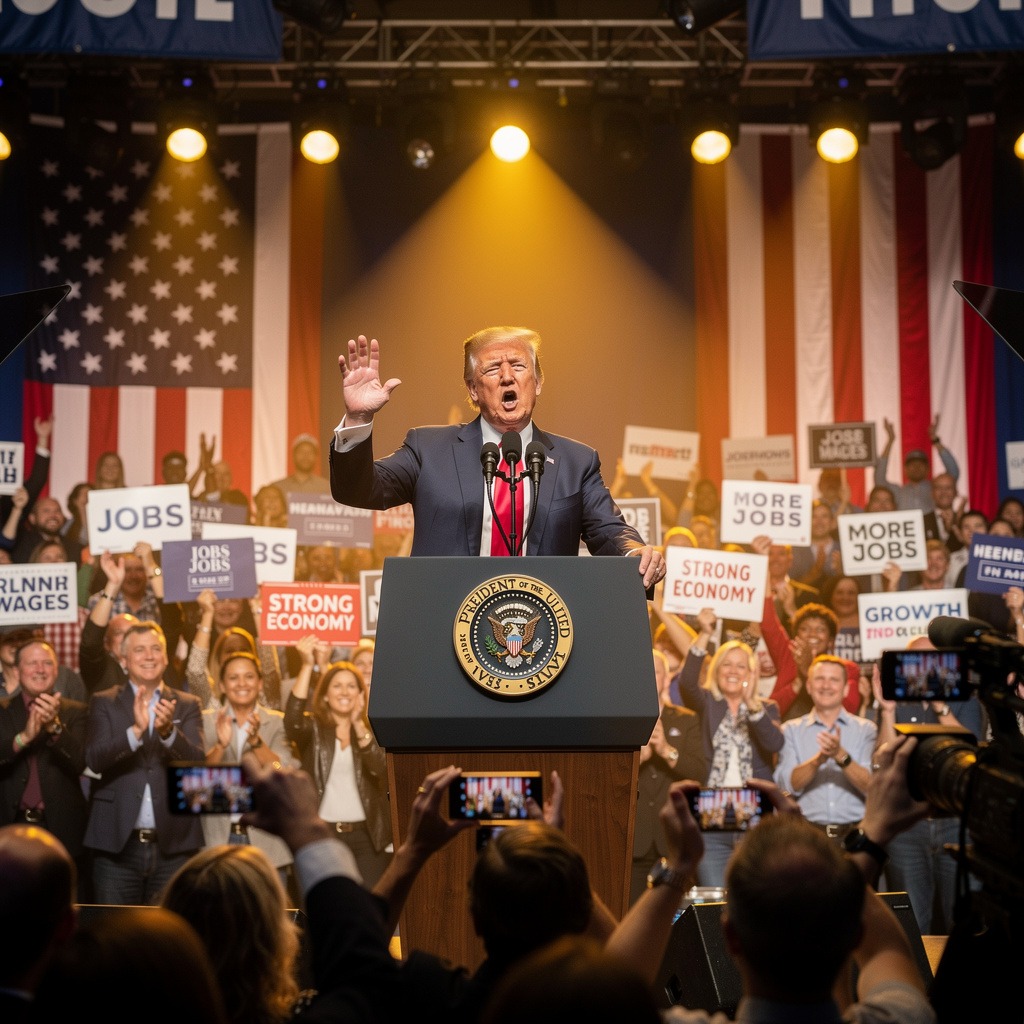
President Donald Trump is shifting his focus squarely toward the upcoming midterm elections, launching a nationwide economic tour as he seeks to persuade voters that his agenda is delivering real results. With strong economic data, rising consumer confidence, and recent political wins behind him, the president is betting that momentum can overcome the historical headwinds that often punish the party in power during midterm cycles.
Speaking as markets digest fresh GDP data showing the U.S. economy growing at its fastest pace in two years, Trump framed the current moment as unprecedented. He touted trillions of dollars in investment, thousands of new businesses under construction, and major legislation set to kick in, all while acknowledging that history is not on his side.
“Presidents never win midterms,” Trump noted, referencing decades of electoral patterns. Still, he argued that the strength of the economy and the scale of investment underway could help rewrite that narrative.
Economic Wins Take Center Stage
The administration is leaning heavily on recent economic indicators. Strong consumer spending has fueled GDP growth, reinforcing the White House’s argument that its policies are stimulating demand and business expansion. Trump has described the current environment as the “greatest investment in history,” citing approximately $18 trillion in activity and a surge in business development nationwide.
This economic message forms the backbone of the president’s campaign push. He plans extensive travel across the country, campaigning aggressively in support of Republican candidates and framing the election as a referendum on economic direction rather than party loyalty.
Republican strategists argue that voters will ultimately prioritize affordability and pocketbook issues over political noise. They point to Democratic-controlled states like Virginia, where recent tax and fee increases—such as delivery and service charges—have drawn criticism after promises of affordability.
“If Republicans stay disciplined and focus on the economy,” panelists argued, “they can make the case that staying on the current track is preferable to higher taxes and rising costs.”
Can Trump Defy Midterm History?
Historically, midterms have proven difficult for sitting presidents, regardless of party. Voters often use the election to rebalance power or express dissatisfaction. Even Trump acknowledged the challenge, calling the midterms a tough environment for any administration.
Yet supporters believe Trump’s political profile and energy set him apart. As only the second nonconsecutive two-term president, Trump brings a unique dynamic to the race. His endorsement power remains influential, though not without controversy.
One example is New York, where Representative Elise Stefanik exited the gubernatorial race after Trump declined to endorse her, instead backing Bruce Blakeman. While Blakeman lacks Stefanik’s national recognition, Trump’s support could prove decisive. The move underscores how deeply involved the president plans to be in shaping key races.
Foreign Policy vs. Kitchen-Table Issues
Panelists also debated whether Trump’s foreign policy achievements will resonate with voters focused on everyday costs. Supporters praised the administration’s emphasis on deterrence and avoidance of major global conflicts, arguing that success often goes unnoticed precisely because crises were prevented.
However, critics questioned whether voters can “feel” those wins in their daily lives. Rising concerns about federal spending, interest payments on national debt, and proposals to significantly increase defense spending have sparked debate about fiscal sustainability.
For many households, the key question remains simple: “What’s in it for us?” Analysts noted that while long-term geopolitical strategy matters, voters heading into the midterms are more likely to judge success by grocery bills, rent, gasoline prices, and tax refunds.
Energy, Gas Prices, and Inflation
Energy policy emerged as a critical piece of the midterm equation. Gasoline prices, often viewed as one of the most visible indicators of inflation, remain central to consumer perception. Filling up a tank provides an immediate and tangible sense of economic pressure—or relief.
Supporters argue that if Trump’s energy strategy leads to stable or declining fuel prices, it could meaningfully boost voter confidence. However, some panelists cautioned that broader inflation dynamics and interest rates remain stubborn, limiting how quickly households may feel relief.
Consumer Sentiment Shows Improvement
One bright spot for the administration is rising consumer optimism. Recent consumer sentiment surveys show confidence reaching a five-month high, with gains spread across income levels, age groups, education backgrounds, and political affiliations.
Despite persistently high prices, Americans have shown resilience in their spending patterns. Durable goods purchases have climbed to a three-month high, suggesting households are willing to make longer-term investments even amid uncertainty.
Economists noted that job growth often lags GDP growth, and the labor market may be on the cusp of improvement. Businesses remain cautious, hesitant to hire aggressively but also reluctant to lay off workers, reflecting uncertainty about the economy’s direction. If hiring accelerates later in the year, it could strengthen the administration’s economic narrative.
Tax Refunds and Timing Challenges
One potential messaging hurdle is timing. While tax refunds could provide households with a noticeable boost in cash flow, those benefits often arrive weeks or months after filing. Many Americans won’t see refunds until late February, March, or even later, potentially blunting their immediate political impact.
As panelists joked, few people rush to file taxes the moment the calendar flips. The lag between policy effects and household experience may complicate efforts to tie economic improvements directly to the midterm campaign.
A Rock Tour for the Economy
Trump’s strategy has been likened to a rock band going on tour to sell albums—high energy, constant appearances, and a clear message. The question is whether the “hits” are strong enough to resonate with voters facing ongoing affordability challenges.
The president is betting that economic growth, improving sentiment, and targeted messaging around cash flow and costs will be enough. Whether that bet pays off will depend on whether voters feel meaningful improvement in their daily lives by November.
As the midterms approach, Trump’s campaign trail push will test whether economic optimism can overcome historical precedent—and whether voters are willing to reward the party in power for progress they can see, feel, and afford.