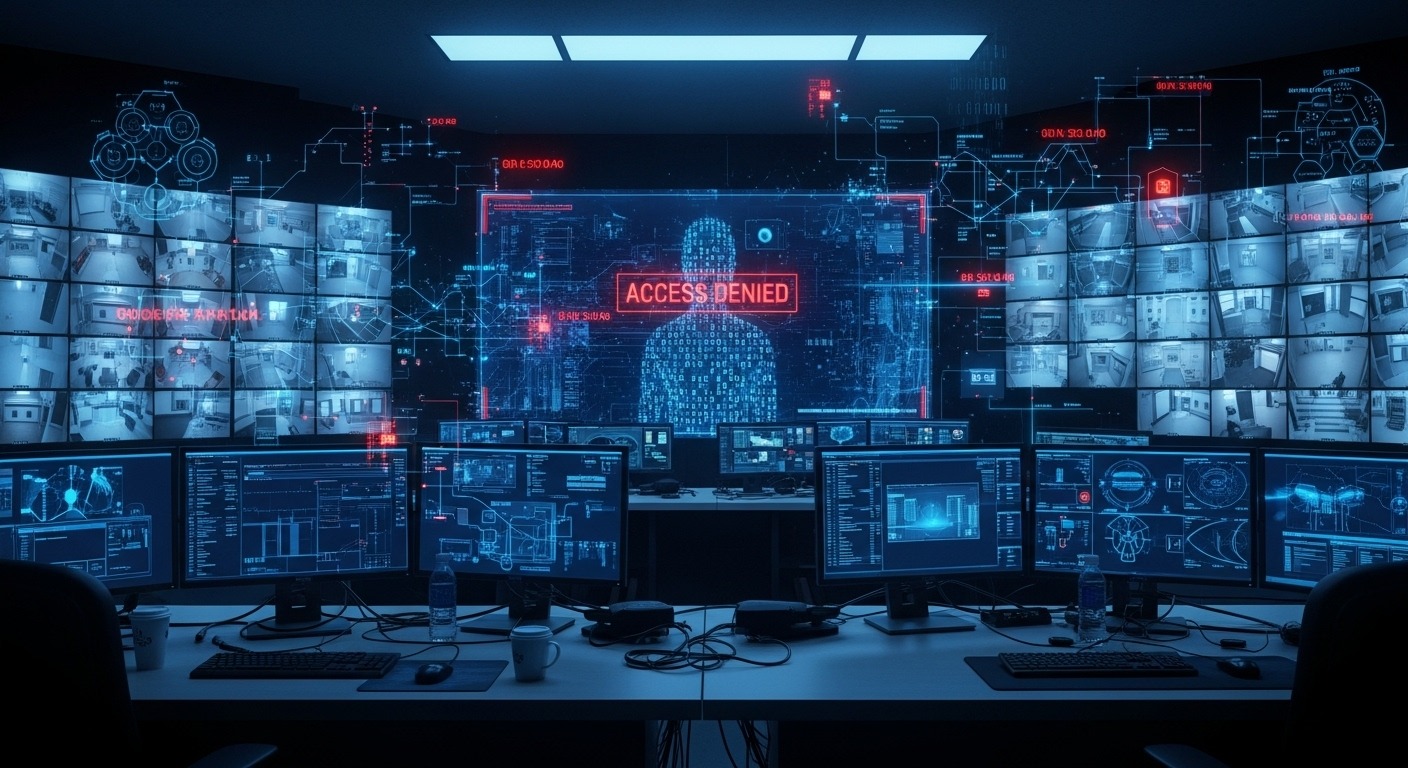
Imagine guarding the White House, watching security cameras that protect the most powerful office on Earth. Every move is monitored, every system double-checked. Now imagine discovering that behind all those layers of security, someone invisible has been watching everything—silently, patiently, and undetected. This is not fiction. This was the reality revealed by the SolarWinds cyberattack, one of the most devastating supply chain attacks in history.
A False Sense of Absolute Security
The White House, the U.S. military, intelligence agencies, and major corporations rely on complex digital systems to function. These systems are designed with multiple layers of monitoring and control. Ironically, that very complexity became their weakness.
At the heart of this breach was SolarWinds, a Texas-based company that builds network and system management software used by large organizations. SolarWinds was not a household name, but it was deeply embedded in global digital infrastructure. By 2019, its tools were used by 425 Fortune 500 companies, all major U.S. telecom providers, every branch of the U.S. military, and even the Office of the President.
That widespread trust turned SolarWinds into the perfect target.
Understanding Supply Chain Attacks
Modern technology relies on long and complicated supply chains. Hardware and software are built through layers of vendors, subcontractors, and dependencies. No single organization fully understands or controls the entire chain.
A supply chain attack exploits this reality. Instead of hacking the final target directly, attackers compromise a trusted vendor. When the vendor distributes software updates, malware spreads quietly to every customer downstream.
This type of attack is particularly dangerous because:
-
The software is trusted and digitally signed
-
Antivirus tools often fail to detect it
-
Victims install the malware themselves
The SolarWinds attack demonstrated how devastating this approach can be when executed at scale.
The Orion Backdoor: A Perfect Trojan Horse
The attackers focused on SolarWinds Orion, a popular network monitoring platform. By compromising SolarWinds’ update system, they implanted malicious code into legitimate Orion updates. These updates were digitally signed by SolarWinds, making them appear safe and authentic.
Once installed, the malicious DLL acted as a backdoor, quietly communicating with attacker-controlled servers. It blended into normal network traffic and waited patiently. If attackers deemed a target valuable, the malware escalated into a second stage, allowing hands-on access and data exfiltration.
This was not a smash-and-grab operation. It was cyber espionage at the highest level.
Scope and Impact of the Breach
Out of roughly 300,000 SolarWinds customers, about 33,000 used Orion. Around 18,000 installed infected updates, and at least several dozen high-value targets were actively exploited. These included key U.S. government agencies such as:
-
The White House
-
Department of Defense
-
National Security Agency
For nearly a year, sensitive government communications and internal networks were potentially exposed. What data was stolen remains classified, adding to the severity and embarrassment of the incident.
Discovery: How the Attack Was Exposed
Remarkably, the breach was not discovered by government cybersecurity teams. Instead, it was uncovered by FireEye, a private cybersecurity company and SolarWinds customer.
FireEye noticed suspicious activity involving modified Cobalt Strike tools—legitimate penetration-testing software repurposed by attackers. Their investigation traced the anomaly back to a SolarWinds appliance. Reverse engineering revealed a hidden backdoor communicating with suspicious domains.
Within days, FireEye publicly disclosed the breach, naming it SUNBURST. Microsoft later referred to it as Solorigate.
Containment and Damage Control
Security teams moved quickly to contain the threat. By sinkholing attacker-controlled domains with the help of Microsoft and GoDaddy, they forced the malware into a dormant state, effectively neutralizing it.
This rapid response prevented further damage and allowed analysts to measure the scope of the infection before the wider public even learned about it.
Attribution: Who Was Behind the Attack?
Multiple intelligence agencies—including the FBI, NSA, CISA, and the UK’s NCSC—attributed the attack to APT-29 (Cozy Bear), a hacking group linked to Russia’s Foreign Intelligence Service (SVR).
Evidence included:
-
Reused infrastructure
-
Similar malware techniques
-
Overlapping command-and-control patterns
Even Russian cybersecurity firm Kaspersky indirectly acknowledged the link by identifying code similarities with Turla, a known Russian intelligence cyber tool.
Interestingly, SolarWinds was also breached by a second attacker, attributed to a Chinese threat group, in a separate incident called Supernova.
Lessons Learned: No Rollback Possible
The SolarWinds attack was a wake-up call. It showed that:
-
Absolute security is an illusion
-
Nation-state attackers will eventually get in
-
Detection and response matter more than prevention alone
The U.S. government responded with Executive Order 14028, strengthening cybersecurity practices, improving information sharing, and emphasizing software supply chain security.
Organizations worldwide began reassessing their dependencies, asking a critical question:
“Do we really know what runs inside our systems?”
Conclusion
The SolarWinds cyberattack changed the cybersecurity landscape forever. It exposed how deeply interconnected—and vulnerable—modern systems are. Once trust is weaponized, even the most secure institutions can fall silently.
There was no rollback. Only lessons, consequences, and a new era of cyber defense.